AI is accelerating vulnerability discovery and exploitation. But remediation still moves at human speed.
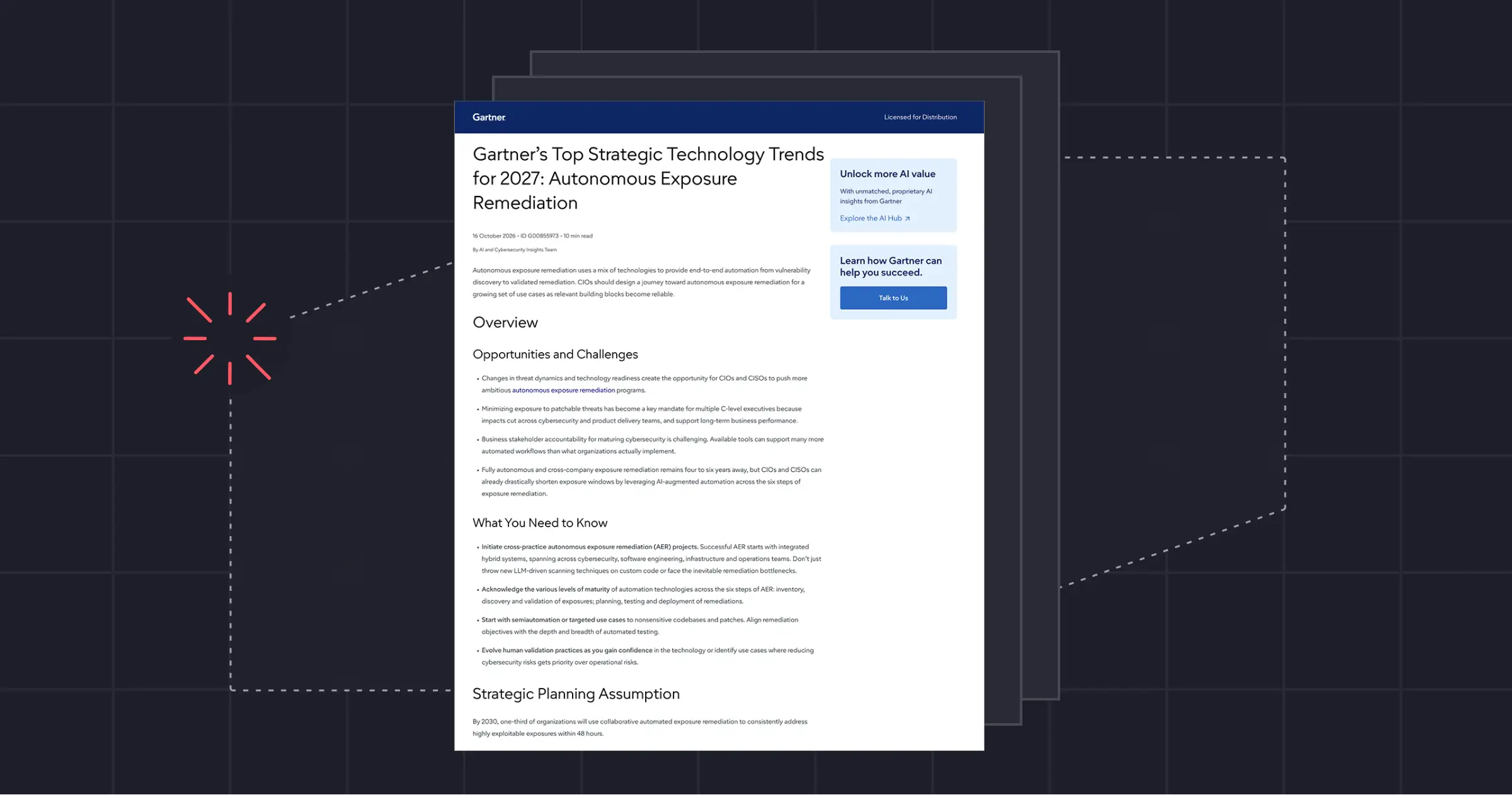
Gartner® has identified Autonomous Exposure Remediation (AER) as one of its Top Strategic Technology Trends for 2027, discussing the shift toward end-to-end automation, from vulnerability discovery to validated remediation.
Gartner says CIOs and CISOs "can already drastically shorten exposure windows by leveraging AI-augmented automation across the six steps of exposure remediation." Read the full report, and see how we believe Miggo's Autonomous Mitigation closes the exposure window while the fix is on its way.
About the report
Autonomous exposure remediation (AER) is one of the Gartner Top Strategic Technology Trends for 2027. According to Gartner, AER "uses a mix of technologies to provide end-to-end automation from vulnerability discovery to validated remediation."
"Advanced threat actors have always been faster at exploiting vulnerabilities than organizations have been good at timely patching them. This won't change. What is changing is the ability for more attackers to automate their post-breach activities, and the opportunity for defenders to increase automation in various steps of the remediation workflow and shorten their exposure window."
Gartner Strategic Planning Assumption
"By 2030, one-third of organizations will use collaborative automated exposure remediation to consistently address highly exploitable exposures within 48 hours."

Miggo is recognized as a Sample Vendor in the report.
What You'll Learn
1.
Why Autonomous Exposure Remediation matters
How AI-driven threats are increasing the urgency to close exposure windows.
2.
The Six Steps Toward Autonomous Remediation
From inventory and discovery to validation, verification and remediation.
3.
What Gartner Recommends
Gartner recommendations for adopting automation, building trust and accelerating remediation.
"Within a few years, AER will evolve to a multi-agent system supporting agentic workflow and extend its scope to third-party software and infrastructure exposures primarily by offering virtual patches or embedding cybersecurity natively as part of agentic software development."
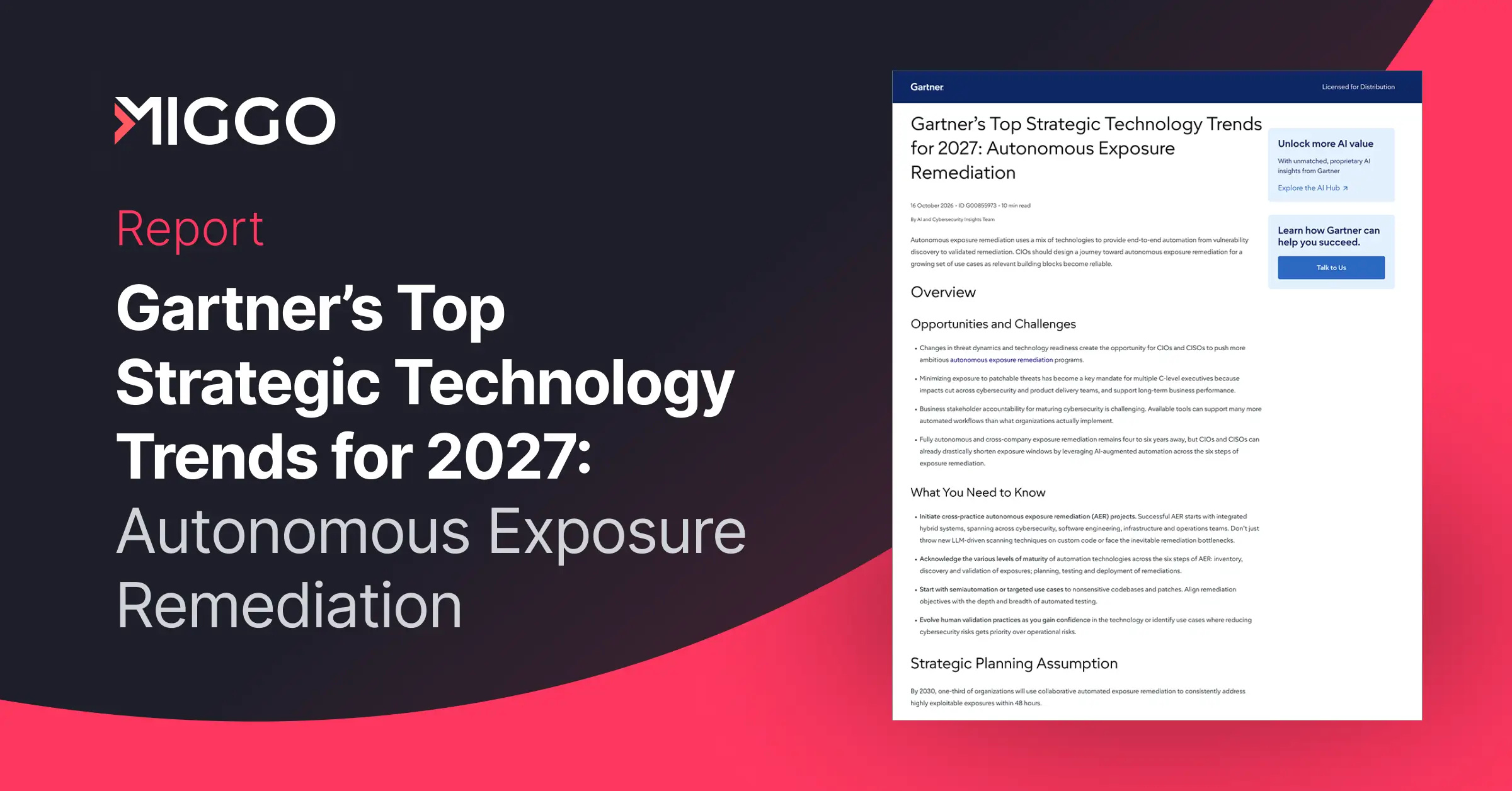
Download the Gartner Report
Get your complimentary copy.