A critical remote code execution flaw in the Java runtime is being disclosed. This page tracks what is public, explains what it means for the Java services you run, and shows how Miggo can protect you while patches roll out.
Last updated: November 17, 2026, 23:39 IST. This page is updated on a rolling basis as new details become public.
The Short of It
- A vulnerability in the OpenJDK Java runtime was released today (November 17, 2026).
- Oracle has released a patch with no current releases from distro maintainers or other OpenJDK distributions.
- Miggo has reproduced it as a DoS, with the researchers demonstrating an RCE on specific Java projects.
- Miggo's AWS PMR customers and Miggo customers have received WAF rules to mitigate without patching, before the patch was released.
- To protect sensitive information, we will release more technical details only after wider disclosure happens.
What Is Java4Shell?
Java4Shell is a critical vulnerability in OpenJDK, tracked as CVE-2026-114938. It was discovered and reported by the research firm Calif, and public reports describe it as a memory corruption flaw in Java's standard library that could allow an unauthenticated attacker to run code inside a Java application.
What makes Java4Shell different from most Java vulnerabilities is where it lives. The flaw is in the Java runtime itself, not in a third-party library. Any application that runs on an affected runtime and decodes attacker-controlled input may be exposed, regardless of which frameworks or dependencies it uses. It's especially vicious considering authentication functions necessarily operate on user input like authentication tokens or certificates.
What Is Public So Far
We will add the full technical details to this page once they are published.
Why Java4Shell Will Be Hard to Patch Quickly
As the name implies, this is feeling like a Log4Shell. Those of us who lived through it remember the difficulty of figuring out every single piece of Java code in your stack.
Updating a library is a routine change for most engineering teams. Updating the runtime underneath every Java service is a larger job.
First, Java runtimes are everywhere and many of them are hard to see. They are bundled inside applications, baked into container base images and installed through operating system packages. A dependency scan of your code will not find them, because the vulnerable code is not one of your dependencies.
Second, installing a fixed build does not fix a service that is already running. Each JVM has to be restarted on the new version, and for production services that means planning a rollout.
Third, vendor builds arrive on different schedules. Teams that run Temurin, Corretto or a distribution's OpenJDK package may need to wait for their vendor's release, even after Oracle's fix is available.
The result is a gap between the moment the vulnerability is public and the moment every exposed service is running a patched runtime. Attackers tend to move fastest in exactly that gap.
Which of Your Services Are Actually Exposed?
Knowing that you run Java is not enough to plan a response. Security teams need to know which running services use an affected runtime, which of them process untrusted input, and which of them are reachable from the internet.
Miggo answers those questions from runtime evidence. Using DeepTracing™, Miggo maps the Java services that are actually running in your environment, the runtime versions they are running on and how they are exposed. That lets your team start the patch rollout with the internet-facing services that matter most, instead of working through an inventory of every Java installation.
How Miggo Protects You Before the Patch
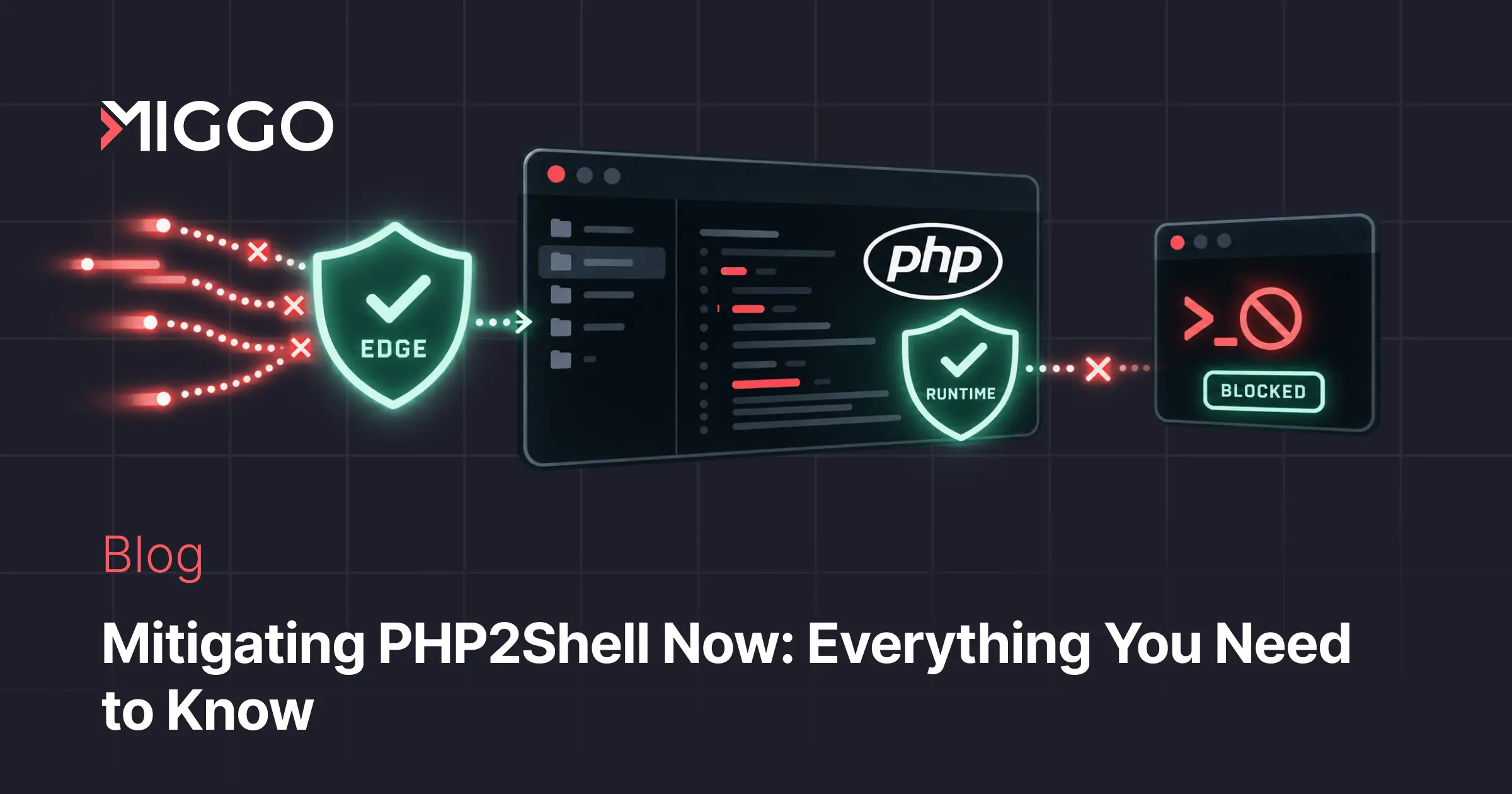
Miggo Mitigation Lab built the mitigation that blocks attempts to reach the vulnerable code path. Miggo Lab delivers WAF rules that run in the web application firewall you already use, so protection can be in place within minutes, without code changes and without waiting for every service to be restarted on a new runtime. Miggo’s customers had a mitigation for their exploitable instances pre-disclosure.
Additionally, all AWS WAF customers can get immediate protection by subscribing to Miggo’s Partner Managed Rulesets natively through the AWS WAF console or by subscribing here. This rule will be continuously updated as more information and new exploits emerge, so customers subscribed will receive updated versions for continuous mitigation.
What to Do Now
- Find every Java runtime in your environment, including JDKs bundled inside applications, container base images and distro packages.
- Prioritize internet-facing services that handle untrusted input.
- Update to Oracle's November 17, 2026 build or to your vendor's fixed release as soon as it is available.
- Restart each service and verify the version the running JVM reports, not only the version that is installed.
- Put a mitigation in front of the services you cannot patch right away.
Get Protected While You Patch
Miggo can show you which of your Java services are exposed to Java4Shell and protect them while your team rolls out the fix.
This page is updated on a rolling basis. Check back for new details as they become public.